Spend less time worrying about your gutters and more time enjoying your home and property.
For homeowners surrounded by trees, the cycle of gutter cleaning can feel relentless. Leaves fall, gutters fill, water overflows, and the process repeats itself season after season. Gutter guards do not eliminate the need for all gutter maintenance, but a properly selected and correctly installed guard system can dramatically reduce the frequency of cleanings required, prevent the kind of heavy debris loading that stresses hangers and joints, and keep your gutters functioning between service visits far more effectively than open gutters ever could.
At Marietta Gutter Company, our gutter guard installation service is built around matching the right guard system to the specific conditions of your property. The tree coverage around your home, the type of debris that falls most heavily, the profile and material of your existing gutters, and your long-term maintenance goals all factor into the recommendation we make. A guard system that works beautifully on one property may be the wrong fit for another, and we take the time to understand your situation before recommending a solution. If you are tired of frequent gutter cleanings, concerned about the damage that debris-loaded gutters are causing, or simply want a lower-maintenance gutter system going forward, fill out our estimate form today and let us assess your property and present your options.
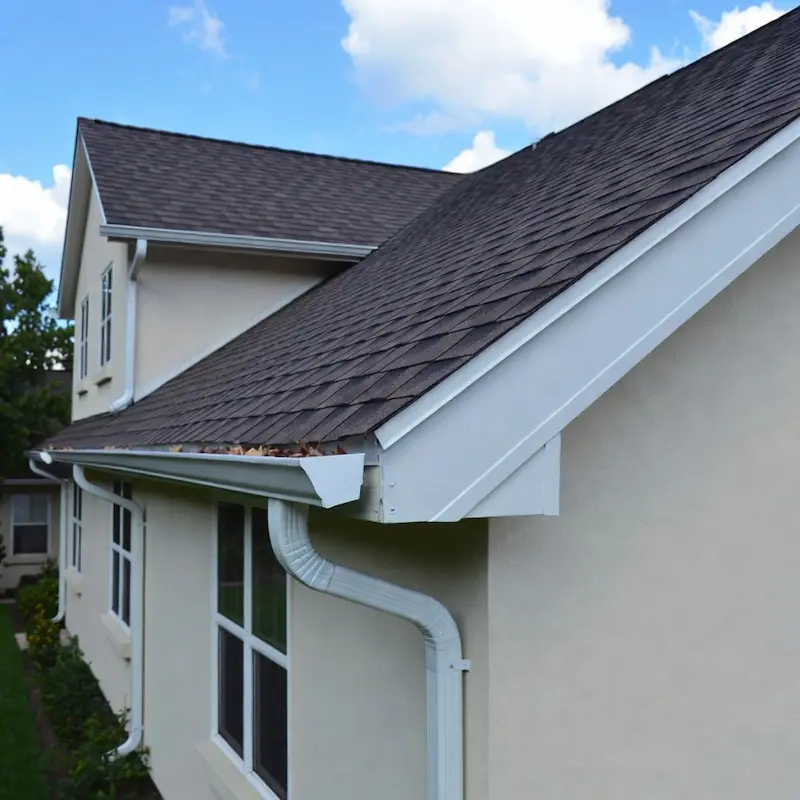

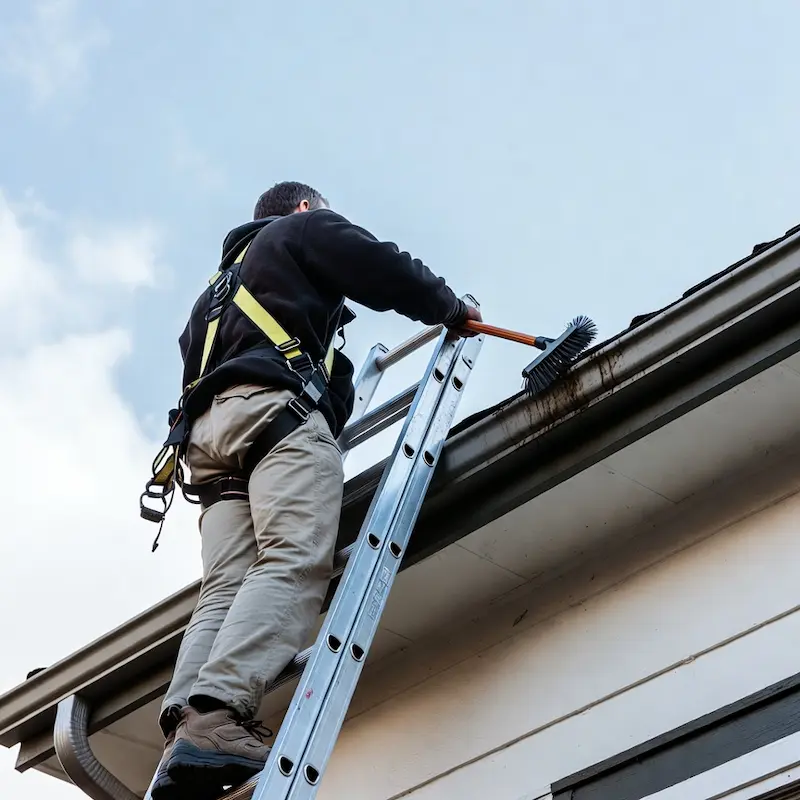

Request Your Free Gutter Guard Installation Estimate
The right gutter guard system is an investment in reducing the time, effort, and cost associated with keeping your gutters functional throughout the year. But the wrong system, or a system installed incorrectly, can create new problems while failing to solve the ones it was supposed to address. Getting a proper assessment of your property and your options is the essential first step.
Gutter Guard Options
Understanding the basic categories of gutter guard systems helps in making an informed decision about which type is right for your property.
Why Gutter Guards?
The Marietta area and the broader North Georgia region present some of the most demanding gutter environments in the country. The combination of dense hardwood canopy, prolific pine coverage, high annual rainfall, and a mild enough climate for year-round plant activity means that gutters in this region face debris loading across every season rather than just during the fall leaf drop. Leaves fall in autumn, pine needles shed in spring and summer, sweetgum balls drop from late summer through winter, and tree blossoms and seed clusters add to the mix in spring.
For homeowners in areas with significant tree coverage, this translates to gutters that can become substantially clogged within weeks of a cleaning during peak debris seasons. A well-matched guard system does not eliminate all of this, but it keeps the heavy debris out of the trough so that what does get through is manageable and the gutters continue to function between professional service visits.
The result for most homeowners is a meaningful reduction in cleaning frequency, less stress on the gutter system from debris weight and moisture retention, and greater confidence that their gutters are doing their job during every rain event rather than only immediately after a cleaning.
How Gutter Guard Installation Words
Installing a gutter guard system correctly is a more involved process than it might appear from the ground. The preparation work that happens before a single guard section is fitted is just as important as the installation itself. Here is a thorough walkthrough of every stage of our guard installation process.
Step 1: Initial Inquiry and Property Discussion
When you fill out our contact form, we ask for details that help us begin thinking about the right approach for your property before we ever arrive on site. Information about your current gutter material, the types of debris that accumulate most heavily, and how frequently you are currently cleaning gives us a useful starting picture. A team member will follow up to ask any additional questions and discuss your goals for the installation, including how much you want to reduce cleaning frequency, whether aesthetics matter in terms of how the guard system looks from the ground, and whether you have had any previous experience with guard systems that did not perform as expected.
Step 2: On-Site Assessment of Gutters and Roofline
The on-site assessment is the most important step in the entire process and the one that most distinguishes a thoughtful installation from a rushed one. Our crew arrives and begins with a full ladder-height inspection of your existing gutter system before any conversation about guard products begins. We are evaluating the condition of the gutter troughs for accumulated debris, standing sediment, and compacted leaf matter, the condition of all joints, end caps, and sealant points, the integrity of hanger hardware and fasteners along each run, the pitch of each gutter section and whether water is flowing correctly toward the downspouts, the condition of the fascia boards behind the gutters and the soffit material below the eave, and the profile and dimensions of the gutter trough which will determine which guard systems are compatible.
We also assess the roofline itself, paying attention to the type and density of tree coverage overhanging or adjacent to the roof, the roof pitch and how water moves off each plane during rainfall, the locations of valleys where high water volumes concentrate, and any moss or algae growth on the roof surface that could wash debris into the gutters at an elevated rate.
All of this information is gathered before we make any product recommendation, because the guard system we suggest is only as good as its fit to the actual conditions present at your property.
Step 3: Gutter Cleaning and Preparation
No guard system should be installed over gutters that have not been thoroughly cleaned and inspected first. Installing guards over a partially clogged gutter locks the existing debris in place and creates conditions where the gutter continues to hold moisture and debris weight even after the guards are installed. This accelerates deterioration of the gutter trough and can cause the very overflow problems the guards were intended to prevent.
We clean your gutters completely before installation begins, removing all debris from the trough, flushing out sediment, and clearing each downspout to confirm it is flowing freely. This cleaning is performed with the same thoroughness as our standalone gutter cleaning service. Once the troughs are clear, we run a preliminary flow test to confirm that the gutters and downspouts are draining properly. Any issues identified at this stage are communicated to you with a clear explanation and repair options if needed, because a guard installed over a poorly performing gutter system will not perform well itself.
Step 4: Gutter Condition Repairs
If the assessment and cleaning reveal issues that need to be addressed before guards are installed, we handle those repairs as part of the preparation process. Common items at this stage include resealing leaking joints or end caps, replacing failed hangers or reinforcing sections that have lost proper pitch, and in some cases tightening or repositioning existing hardware to ensure the gutter trough presents a clean, properly aligned surface for the guard to sit on.
Installing a gutter guard on a sagging gutter section, for example, would result in a guard that sits unevenly, collects debris at the low point, and prevents water from reaching the downspout outlet. We correct these issues first so the guard installation has the best possible foundation to perform from.
Step 5: Guard Product Preparation and Custom Cutting
With the gutters cleaned, inspected, and in good working condition, we prepare the guard sections for installation. Most guard systems require cutting to fit the specific lengths of each gutter run, and corners, end points, and downspout outlet areas all require careful fitting that accounts for the geometry of your particular roofline. We measure each run precisely and cut guard sections to fit cleanly without leaving gaps at the ends or at corners where debris could find its way into the trough.
For guard systems that attach under the first course of shingles, we take particular care at the roof edge to ensure the attachment method does not lift shingles in a way that could compromise the roof’s water resistance. This is a step that requires patience and attention to detail, and it is one of the areas where a hasty installation can create roofing problems that were not present before the guards were installed.
Step 6: Guard Section Installation Run by Run
Guard sections are installed run by run, working around the full perimeter of the home. Each section is fitted to the gutter profile, positioned correctly relative to the roof edge, and secured according to the requirements of the specific guard system being installed. We check the positioning and secure attachment of each section before moving to the next, rather than fitting the entire run loosely and going back to secure everything at the end.
At corners, valleys, and transition points we take additional time to ensure guard sections are fitted in a way that does not create channels for debris to enter or water to bypass the guard and miss the gutter trough. These transition points are the most technically demanding parts of any guard installation and the most common locations for performance failures on jobs that were not done carefully.
Throughout the installation, we periodically step back and check the appearance of the installed sections from ground level, both to verify alignment and to ensure the aesthetic result is clean and consistent along the full roofline.
Step 7: Downspout Inlet Fitting
The area where the gutter trough feeds into the downspout outlet requires specific attention during a guard installation. Some guard systems, if not fitted carefully at this point, can partially obstruct the downspout inlet and reduce the flow capacity at the very point where it needs to be highest. We fit the guard sections around each downspout outlet carefully to maintain full inlet opening while still covering the trough on either side of the outlet.
For properties with particularly high leaf or debris loads, we also discuss the option of installing downspout strainers or leaf traps at the inlet as a secondary measure to catch any fine debris that makes it past the guard system and tends to concentrate at the outlet over time.
Step 8: Post-Installation Flow Test and Final Walkthrough
With all guard sections installed and fitted, we conduct a comprehensive flow test of the complete system. Water is run along each gutter run and we observe how it interacts with the guard surface, confirming that water is entering the trough efficiently rather than sheeting over the front of the guard, that flow is moving consistently toward each downspout outlet without pooling, and that all downspouts are draining freely with no obstruction from the guard installation.
Any section where water is not entering the gutter as it should is adjusted on the spot. After the flow test confirms the system is performing correctly, we conduct a final visual inspection of all installed sections, clean up all material scraps and packaging from the work area, and walk you through the completed installation. We explain how the guard system works, what maintenance it will still require over time, and what signs to look for that would indicate a section needs attention.
Frequently Asked Questions
How much does gutter guard installation cost in Marietta?
Gutter guard installation costs in the Marietta area vary based on several factors that are specific to your property and the guard system selected. The total linear footage of guttering on your home is the primary cost driver, followed by the type of guard system chosen since premium micro-mesh systems cost more than basic screen or foam options. The number of stories on your home affects labor time and complexity, and any preparatory work such as gutter cleaning or minor repairs needed before installation adds to the overall investment. As a general frame of reference, homeowners typically find that higher-quality guard systems cost more upfront but deliver better long-term performance and lower ongoing maintenance costs than budget options. The most accurate way to understand what the project will cost for your specific home is to fill out our estimate form. There is no charge and no commitment involved in getting a quote.
Do gutter guards actually work in an area with as many trees as Marietta?
This is the most important question homeowners in heavily treed areas should ask before investing in any guard system, and the honest answer is that it depends entirely on which system you choose and how well it is matched to the specific debris your property produces. Marietta and the surrounding areas of Cobb County sit within one of the most densely canopied suburban environments in Georgia. Neighborhoods like Murdock, Shadow Glen, and the areas surrounding Sope Creek are known for mature tree coverage that produces leaves, pine needles, sweetgum balls, seed pods, and tree blossoms across multiple seasons of the year. In these environments, a micro-mesh guard system with appropriately sized openings can dramatically reduce the debris that enters the gutter trough. Less capable systems like basic screen guards may keep out large leaves but allow pine needles and fine debris to pass through or bridge the mesh and accumulate on top. We assess your specific tree coverage and debris profile before recommending any system precisely because not every guard works equally well in every setting.
Will gutter guards eliminate the need for gutter cleaning entirely?
No, and any company that tells you otherwise is overstating what gutter guards can do. What a well-chosen and properly installed guard system does accomplish is significantly reducing the frequency of cleanings required and preventing the heavy debris accumulation that causes the most damage to gutters over time. Fine organic material, shingle granules, seed residue, and small debris particles will still find their way into gutters over time regardless of the guard system in place. Most homeowners with quality guard systems in the Marietta area find that a single professional cleaning per year is sufficient to keep the system functioning well, compared to the two, three, or even four cleanings per year that heavily treed properties without guards often require. That reduction represents real savings in both cost and effort over the lifetime of the system.
Can gutter guards be installed on my existing gutters or do I need new gutters first?
In many cases gutter guards can be installed on existing gutters that are in sound condition. The prerequisite is that the gutters are clean, properly pitched, securely fastened, and free of significant damage at joints, end caps, and hanger points. If your existing gutters have issues that would affect drainage performance, those need to be addressed before guards are installed. Placing a guard system over gutters that are sagging, leaking at multiple joints, or partially blocked by compacted debris creates a situation where the guards lock in the existing problems and make them harder to address later. During our on-site assessment we evaluate your current gutters carefully and give you an honest recommendation about whether they are suitable for guard installation as-is, whether they need preparation work first, or whether a replacement and guard installation combined would be the more practical approach.
What type of gutter guard works best for pine needle debris?
Pine needle management is a specific and genuinely challenging problem for homeowners across North Georgia, including many properties throughout the Marietta area where loblolly, Virginia, and shortleaf pines are common. Pine needles are long, thin, and flexible, which allows them to slip through or lay flat across guard openings that would stop a broad leaf in its tracks. Basic screen and reverse curve guards are generally poor performers in high pine needle environments. Micro-mesh systems with small enough opening sizes are the most effective option for properties where pine needles are a primary debris concern, as the mesh openings are too small for needles to pass through while still allowing water to enter the trough efficiently. We always ask specifically about pine tree coverage during our assessment because it is one of the most important variables in selecting the appropriate guard system for a North Georgia property.
Will gutter guards affect the appearance of my home from the street?
Guard systems vary considerably in how visible they are from ground level. Most professionally installed aluminum or steel guard systems sit inside or just at the lip of the gutter trough and are not prominently visible from the street when installed correctly. Some surface tension or reverse curve systems are slightly more visible because of how they sit at the gutter opening. Foam and brush inserts that sit inside the trough are essentially invisible from below. Color matters as well, and many guard systems are available in colors that can be matched or closely coordinated with your existing gutter finish. During the assessment we can show you what the guard options under consideration will look like on your specific gutter profile so you are not surprised by the aesthetic result after installation.
Can gutter guards handle the heavy rainfall that Marietta gets during summer storms?
This is a critical performance consideration that does not receive enough attention in gutter guard discussions. North Georgia summer thunderstorms can deliver rainfall at very high intensity rates in short time windows, and some guard systems that perform adequately under normal rainfall conditions allow water to sheet over the front of the gutter during these intense events because the guard surface cannot absorb water fast enough to direct it all into the trough. The result is water bypassing the gutter entirely and falling against the foundation just as it would from a clogged gutter. We specifically evaluate water entry rate when recommending guard systems for homes in this area and avoid recommending products with documented overflow issues during high-intensity rainfall. Proper installation angle also plays a role in this performance characteristic, which is another reason installation quality matters as much as product selection.
How long do gutter guards typically last?
The lifespan of a gutter guard system depends primarily on the materials used and the conditions it operates under. Premium micro-mesh systems with stainless steel mesh and aluminum frames are among the most durable options available and can be expected to perform well for many years under normal conditions. Basic vinyl screen guards are less durable and more prone to sagging, warping, and brittleness over time, particularly given Georgia’s heat and UV exposure during summer months. Foam and brush inserts have variable lifespans depending on the extent of organic growth and debris loading they experience. We discuss expected lifespan as part of the product selection conversation so the durability of each option is factored into your cost-benefit analysis alongside the upfront installation price.
Do I still need professional gutter cleaning after guards are installed?
Yes, though less frequently than without guards. Even the best guard systems benefit from periodic professional attention to clear any fine debris that has accumulated inside the trough over time, inspect the guard sections for any that have shifted, lifted, or been damaged by falling branches or debris, check that downspout inlets remain clear, and confirm that the gutters beneath the guards are still pitching and draining correctly. The interval between professional cleanings will depend on your tree coverage and the guard system installed, but most homeowners in the Marietta area with quality guard systems find that an annual professional cleaning and inspection keeps everything in good order. We are happy to discuss an ongoing maintenance schedule as part of the guard installation conversation.
What happens if a section of gutter guard is damaged after installation?
Individual sections of most guard systems can be removed and replaced without disturbing the rest of the installation. If a section is dented by a falling branch, warped by heat over time, or simply needs to be removed temporarily for gutter access, we can address that as a separate service visit. When you fill out our contact form to schedule an installation estimate, feel free to mention if you have any existing guard sections that are damaged or performing poorly, as that can also inform the conversation about which replacement system would serve your property best going forward.
Protect Your Gutters and Simplify Your Maintenance for Good
Gutter guards are not a magic solution that eliminates all gutter maintenance forever, but the right system installed correctly on a properly prepared gutter is one of the most practical and cost-effective ways to reduce the burden of gutter upkeep and extend the working life of your gutter system. The key is getting the right product for your specific property and having it installed with the care and precision that makes the difference between a guard that performs and one that creates new problems.